
Grand Prairie Previous Residents Sources
The backward trail has two parts. Land and tax records help identify a parcel and documented transfers. Directories, newspapers, maps, and local files can place a household or structure in a period. Start with the address as it exists now, confirm the county, and keep every source tied to its own date. Grand Prairie reaches Dallas, Tarrant, Ellis, and Johnson counties, so a city name or mailing label alone cannot select the correct deed system.
| Source | Years It Covers | Where Held | What It Shows |
|---|---|---|---|
| County appraisal account | Current tax-account view | Dallas, Tarrant, Ellis, or Johnson CAD | Parcel anchor, situs address, legal description, and displayed owner data |
| Tarrant County Clerk archives | 1874-2021 | Tarrant County Archives | Historic County Clerk material, including identified property series |
| Tarrant Deed History Cards | 1876-1984 | Tarrant County tax records | Free digitized property-tax record images |
| Grand Prairie Telephone Directory | 1918-2005, with listed gaps | UT Austin Briscoe Center citation | Dated telephone and address listings |
| Greater Dallas Residence White Pages | 1957-2010, with gaps | UT Austin Briscoe Center citation | Area-wide residential listings that include Grand Prairie |
| Grand Prairie criss-cross finding | 1966 | Library of Congress directory inventory | An address-arranged directory lead |
| Grand Prairie tax lists | 1913-1968, with listed gaps | ROOTS and local genealogical sources | Historical tax presence by local area |
These sources do not answer the same question. A current appraisal card is not a deed, a deed transfer does not establish who lived at an address, and a directory line is a dated listing. Separating those roles is the best way to build a defensible history of previous residents.
Grand Prairie Past Residents Parcel Start
Use the City of Grand Prairie parcel and address layer to stabilize the location before opening a county search. The city layer exposes a parcel or GIS link, street number, street name, street type, city, city-state-ZIP, address, and geometry. Its city values can include Grand Prairie, Cedar Hill, and Irving, which is another reason to verify the parcel rather than rely on a city label. The city streets service also includes county and city-limit context.
Then open the appropriate appraisal district. Dallas CAD supports address, owner-name, account, business-name, and map entry points. Tarrant provides property-type choices, a free-text search, and a map route. Ellis CAD and Johnson CAD provide their own ownership, parcel, web-map, or GIS entry points, but the reviewed research did not identify equivalent county clerk index details for those two counties. Save the account, situs address, legal description, and displayed mailing address as separate fields.
This is a stable address anchor, not an identity claim. The inspected Dallas CAD example shows why: its property address and mailing address differ. The chain begins with the parcel because an old number or a common street name can otherwise send a search into the wrong county record set.
Grand Prairie Previous Residents Deed Chain
After the parcel and county are confirmed, the recorded chain of title is the route for documented transfers. A grantor is the party transferring an interest. A grantee is the party receiving it. A chain of title is the sequence of recorded transfers tied to the same property. The legal description is the formal land description in the records, and it is often more durable than a street address when a block has been replatted or renumbered.
- Record the current parcel account, situs address, and legal description from the correct CAD.
- Use the county official-record index to locate the latest transfer by the displayed owner, instrument number, date, or legal description when those search paths are available.
- Read the deed image and capture its instrument number, recorded date, grantor, grantee, and legal description.
- Search the earlier party and repeat the process backward, checking deeds, releases, liens, affidavits, plats, and probate instruments only for their stated role in the chain.
- When a web result ends, use the county's documented copy, counter, mail, or archive route rather than guessing at an older transfer.
- Grantor
- The party shown as transferring an interest in the recorded instrument.
- Grantee
- The party shown as receiving that interest in the recorded instrument.
- Chain of title
- A dated sequence of recorded transfers connected through the property, not a statement about occupancy.
- Legal description
- The parcel description used in land records. It helps connect older documents when street numbering changes.
Tarrant County real-estate records links the county's official access route and its recording information.
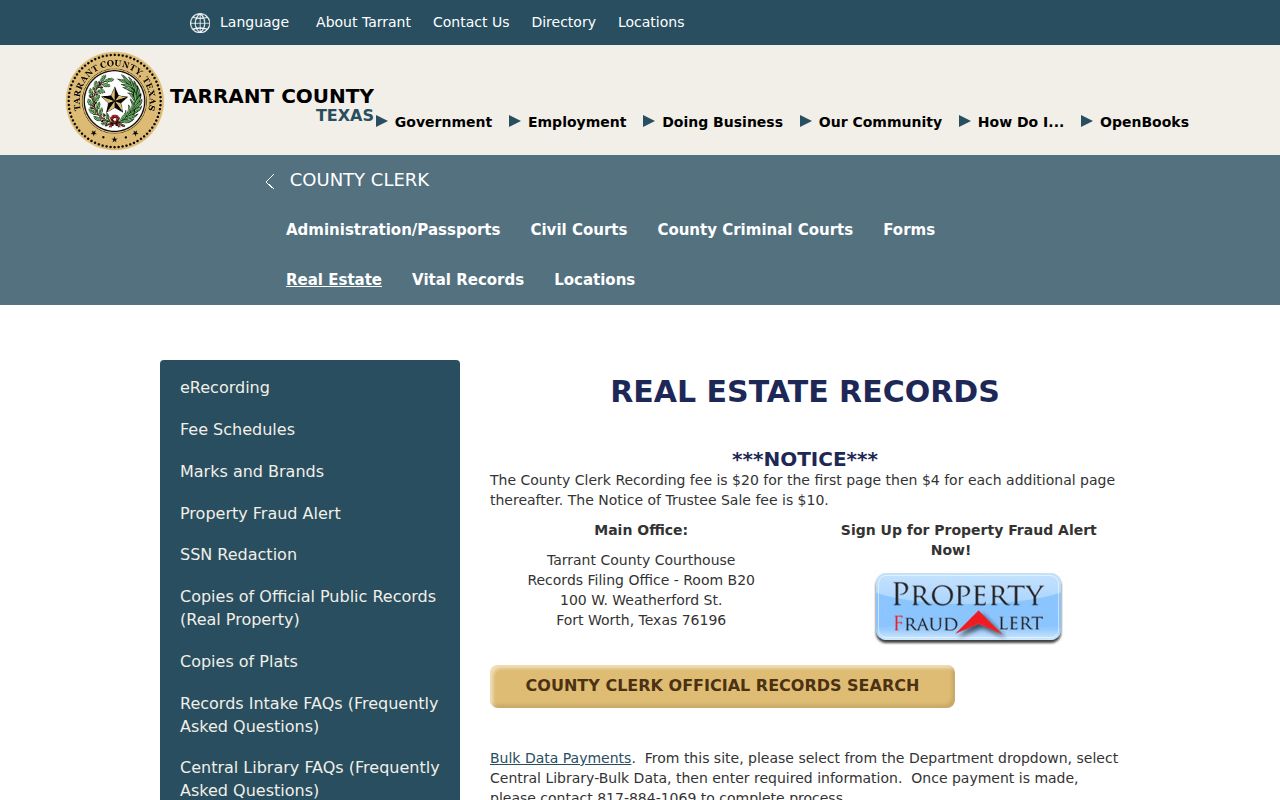
The Tarrant Clerk directs searchers to read the recorded instrument and does not perform title or lien searches for them. That limit makes a careful instrument-by-instrument note essential.
Four Counties Behind Grand Prairie
Grand Prairie's four-county footprint is a records issue, not a minor map detail. City pages identify Dallas, Tarrant, and Ellis counties, while the FY2025 city ACFR also identifies Johnson County. Confirm the parcel's county through city GIS and the correct CAD before opening a recorder index. A Grand Prairie mailing address is not enough to choose Dallas, Tarrant, Ellis, or Johnson records.
The Dallas County official-record portal can be searched by name or instrument number under county guidance. Online viewing is non-certified; when a digitally viewable record is available, the county's e-Certify process is the official digital-copy route. If no digital copy is available, use the paper request or in-person route. The Dallas form supports grantor or grantee, instrument number, document type, and property-address details, with a prepaid self-addressed envelope and specified non-personal-check payment methods for mail requests.
Tarrant documents four access methods for real-property copies: online, in person, mail, and related official-record access. Its mail route uses a self-addressed envelope and a cashier, business check, or money order. For Ellis and Johnson parcels, the reviewed research provides CAD and GIS starting points but not verified current clerk-index fields or fee schedules. Check the relevant county clerk page before requesting an older instrument.
Tarrant's 1876 Records Break
Tarrant research has a clear preservation boundary. The county historical guide identifies a courthouse fire on March 29, 1876, and says pre-fire material was destroyed. Its archives identify County Clerk records from 1874 onward, but a searcher should not treat that date as a promise that every pre-fire original survived. The later post-fire trail is the practical starting point for a Tarrant parcel.
Tarrant archival holdings identify property material for 1874-1958, with other historic series such as quit-claim deeds, sheriff's deeds, tax deeds, and warranty-deed affidavits carrying their own ranges. Deed History Cards add free digitized property-tax images for 1876-1984. These are valuable leads, yet a tax card and a recorded deed remain different types of evidence.
Grand Prairie Past Residents Tax Records
Tax lists can bridge the period before a modern appraisal card. Grand Prairie lists at the local-history level begin in 1913 and include runs through 1960, 1963-1965, and 1968. Dalworth, Dalworth Park, and delinquent lists are separate series with their own years. Those neighborhood names are search keys, not interchangeable labels for every Grand Prairie address.
The Grand Prairie Genealogical Society says volunteers digitized city tax rolls from 1913 until the county took over in the 1970s. That handoff explains why an early city tax entry and a later county appraisal account do not look alike. Use the list to document a historical tax presence, then test it against a directory, deed, newspaper, or local file. Do not turn it into a current parcel or household record.
Grand Prairie Previous Residents Directory Trail
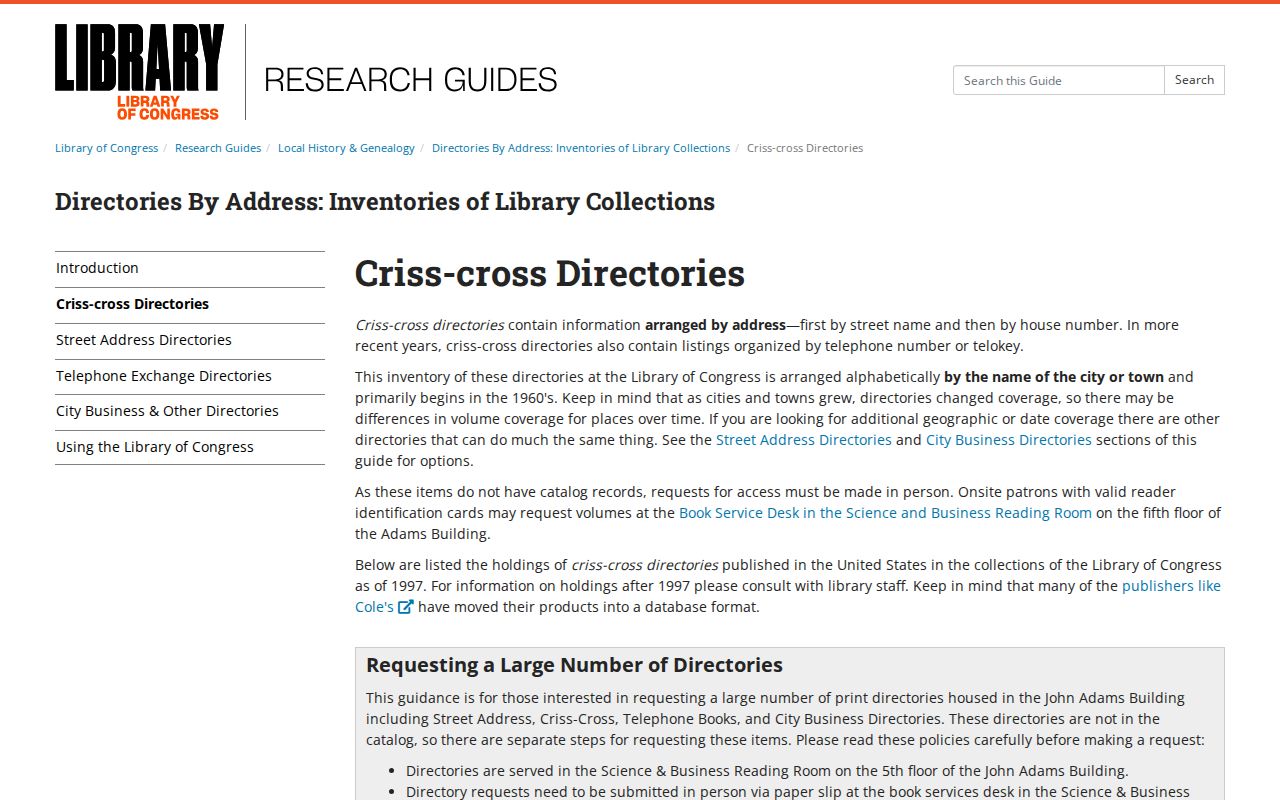
Telephone and address directories help fill the occupancy question that a deed cannot settle. UT Briscoe's Grand Prairie Telephone Directory series reaches from 1918 through 2005 with listed breaks. Greater Dallas Residence White Pages reach from 1957 through 2010 with gaps, but their scope is regional. The Library of Congress inventory has a specific Grand Prairie criss-cross hit for 1966. Use the exact edition and arrangement in the citation.
The Library of Congress criss-cross directory guide describes the name and address approaches that make the 1966 finding useful.
For the household layer, use a simple dated flow: directory year to the closest available census schedule, then back to the parcel or deed note for the same address. A directory result is an occupancy lead for its edition, while a census or recorded instrument must be evaluated on its own date and scope. The collection details remain in the Grand Prairie city directories.
Grand Prairie Address Map Test
Before matching an old directory address to a modern parcel, check whether the structure and street fit the period. The Library of Congress holds a November 1929 Grand Prairie and Dalworth Sanborn set with nine sheets. UNT also provides a 1920 Grand Prairie sheet. These maps show structures, street patterns, and land uses. They do not identify who lived in a building.
Use a map sheet as a bridge: printed address or nearby landmark, then structure and street clues, then local files or a dated directory. The city planning pages explain that address assignment follows a legally platted and recorded parcel, and plats can show boundaries, easements, streets, and common areas. A preliminary, amending, replat, final, or minor plat may explain why a number appears to vanish from later records.
Grand Prairie Newspaper Gap
Newspapers are a useful dated companion, but their gaps belong in the research record. ROOTS lists the Grand Prairie Texan in several periods and shows no holdings for 1938-1952. It then lists the Grand Prairie Daily News Texan from late 1958 through June 1966 and the Grand Prairie Daily News from July 1966 through June 1989. A search that stops in the missing interval has reached a collection limit.
Check the next available year, then compare Arlington and Dallas newspaper runs, tax lists, the Briscoe telephone directory, and local-history files. ROOTS also holds clippings, photographs, landmark applications, and city scrapbooks. Landmark material can offer an old owner, structure date, or address context, but it needs separate confirmation for present facts.
Grand Prairie Previous Residents Proof Limits
Probate, obituaries, cemetery material, and local historical files can help close a family or address trail, but none should be treated as a universal index. Dallas Central Records identifies historic deeds, Commissioners Court records, and probate material, with current transition notices that should be checked before a visit. ROOTS and the Historical Organization may hold local files that are not obvious in a web search. Ask the custodian which collection and date range fit the question.
Keep a short source trail for each result: address or legal description, county, document or edition date, repository, and what the source actually supports. That method makes it easier to distinguish a transfer, a tax entry, a directory listing, a map detail, or a family-history reference. It also leaves room for a true gap when the evidence does not identify who lived here before.
Lawful personal use. Grand Prairie previous-resident research fits family and house history, heir research, and civic curiosity. Do not use a historical record to harass, track, or harm a living person.